
Underwater research techniques and methods are now used by researchers across a wide range of disciplines – including Earth and environmental sciences, biological sciences and archaeology. They enable the research field to be expanded to include the aquatic environment, and their application requires knowledge of diving procedures and the safe use of diving equipment.
This module combines diving theory and practice with an introduction to basic underwater research methods. Participants acquire the skills necessary to operate in an aquatic environment and learn practical tools for documentation and data collection. Course graduates can obtain international diving certifications and take part in research placements.
Number of places on the module: 10
When do the classes take place?
Courses within the competency blocks will be held during the summer semester. The maximum duration of a competency block is 3 academic years.
Important: failing courses within the competence block does not affect degree completion (the block is competence-based and developmental).
Important: It is recommended that students complete all classes in a single semester, choosing at least the minimum package comprising: ‘Diving Theory’, ‘Diving Practice’ and ‘Underwater Research Practice’ (which corresponds to the diving course).
Completion of the module is confirmed by a certificate, which can be obtained even before the end of the degree programme.
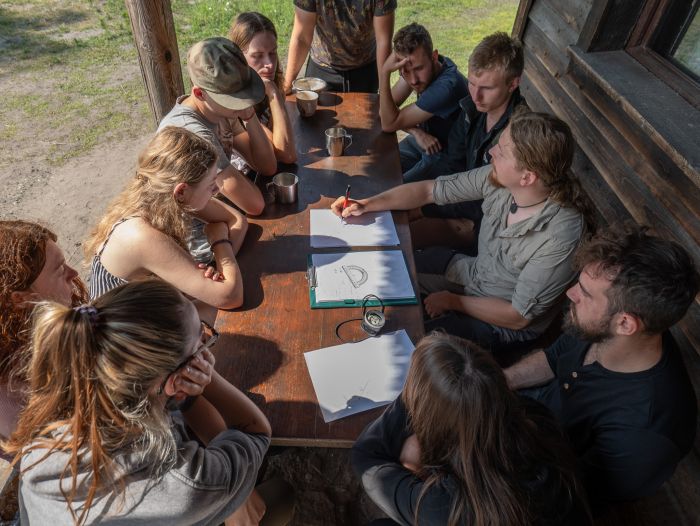
Structure of the module and course description
1) Diving Theory 1201-OG-BK-TN
Lecturer: Dr Andrzej Pydyn, Professor at Nicolaus Copernicus University (pydyn@umk.pl)
Venue: Institute of Archaeology, Nicolaus Copernicus University (Szosa Bydgoska 44/48)
The course covers key topics essential for safe diving and understanding the diving environment, including: the history of diving, training systems (recreational, professional and scientific), legal aspects, the physics and physiology of diving, diving medicine (illnesses and injuries), decompression theory and basic breathing mixtures, basic and advanced equipment, diving techniques, and the basics of hydrology.
These classes are one of three components (Diving Theory, Diving Practice, Underwater Research Practice) of the diving course and cannot be undertaken separately.
2) Diving Practice 1201-OG-BK-PN
Lecturers: Dr Andrzej Pydyn, Professor at Nicolaus Copernicus University (pydyn@umk.pl), Dr Mateusz Popek (mpopek@umk.pl)
Venue: swimming pool at the University Sports Centre.
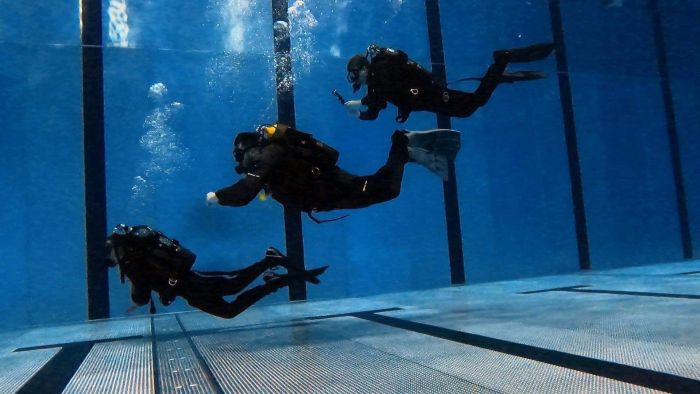
Participants acquire practical skills enabling them to use diving equipment and dive safely in a buddy system with a diver of the same or higher qualification. The exercises are conducted in a swimming pool environment, under the strict supervision of a qualified instructor.
These classes are one of three components (Diving Theory, Diving Practice, Underwater Research Practice) of the diving course and cannot be taken separately.
To enrol in the ‘Diving Practice’ module, the following conditions must be met:
- Medical certificate – guidelines for doctors are provided below, and a participant’s health declaration (downloadable here).
- Basic swimming skills:
- swimming 100 m non-stop (4 lengths), without stopping, without pausing at the turns, without touching the ropes
- ability to open one’s eyes underwater
- Personal equipment (diving ABC) – students should purchase: a mask, snorkel and fins.
- During the first few sessions, ABC equipment will be provided to students (for the duration of the induction
3) Underwater Research Practicum 1201-OG-BK-PBP
Lecturers: Dr Andrzej Pydyn, Professor at Nicolaus Copernicus University (pydyn@umk.pl), Dr Mateusz Popek (mpopek@umk.pl)
Course dates: First two weeks of July 2025
Location: fieldwork will take place on Ostrów Lednicki.
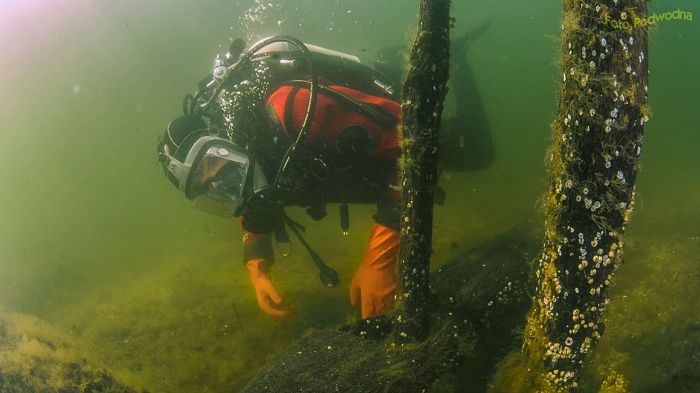
The course develops diving techniques and procedures and introduces practical methods of underwater research, including: safe buddy diving, site documentation, the basics of underwater navigation, deploying a research net, sampling in an aquatic environment, and the basics of underwater photography and 3D documentation.
This module is one of three modules (Diving Theory, Diving Practice, Underwater Research Practice) that form part of the diving course and cannot be undertaken separately.
To enrol in the ‘Underwater Research Practice’ module, all the requirements must be met, as is the case for the ‘Diving Practice’ module
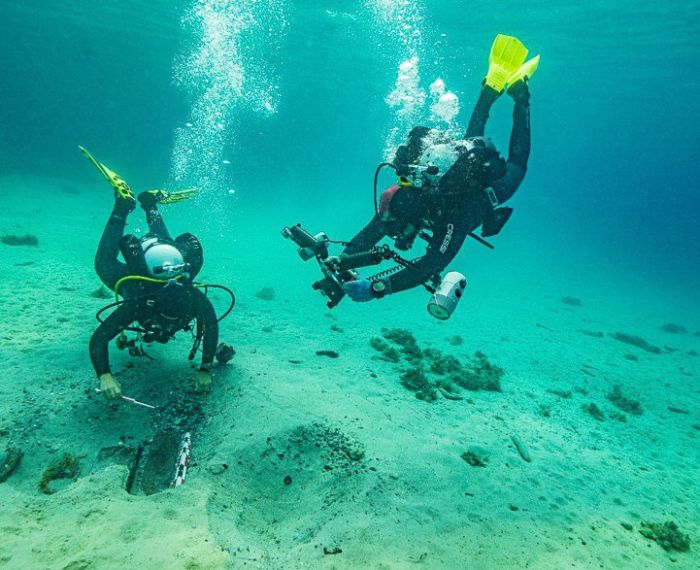
4) Methodology of Underwater Research 1201-OG-BK-MBP
Lecturer: Dr Mateusz Popek (mpopek@umk.pl)
Venue: Institute of Archaeology, Nicolaus Copernicus University (Szosa Bydgoska 44/48)
The course covers advanced techniques for data documentation and processing (e.g. GIS, photogrammetry, sonar data processing, data integration, AI applications), as well as methods of search, documentation and exploration in aquatic environments (traditional and modern approaches, exploration equipment and techniques, sketch documentation, photography and film).
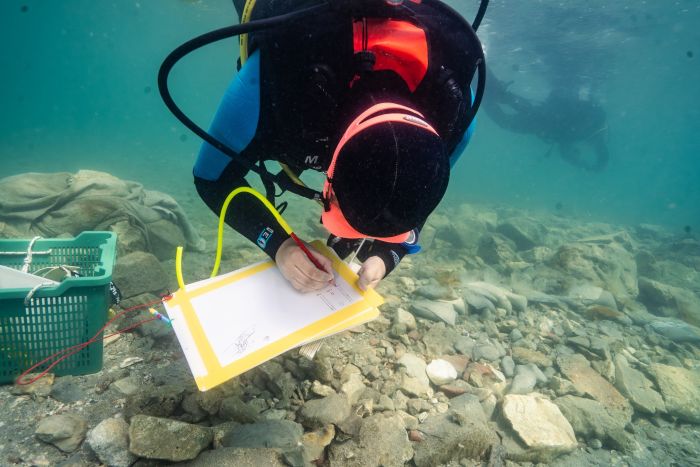
5) Underwater Environmental Research 1201-OG-BK-PBS
Lecturers: Prof. Tomasz Kakareko, PhD (kakar@umk.pl)
Venue: Faculty of Biological and Veterinary Sciences (1 Lwowska Street)
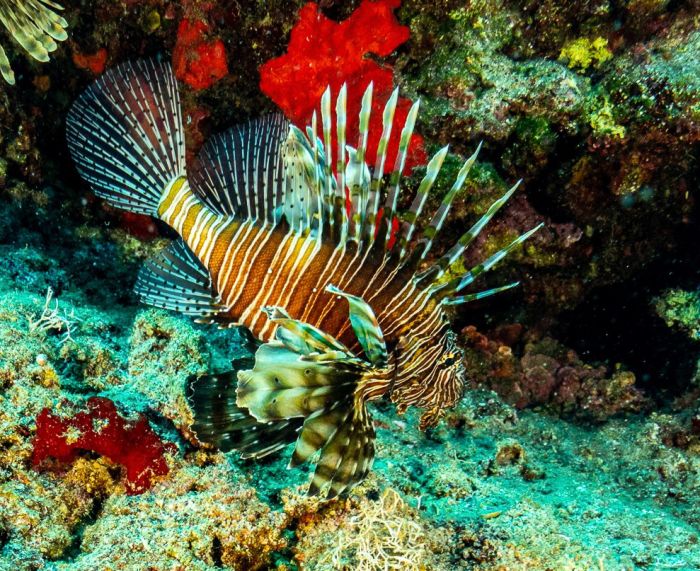
Introduction to the use of underwater techniques in hydrobiological research – including the assessment of biodiversity, distribution and habitat preferences of aquatic organisms (macrophytes, macroinvertebrates, fish) and elements of fish behaviour observation; methods for the qualitative and quantitative assessment of organism communities; equipment, documentation, photography and film in environmental research.
Recommended course selection and ‘minimum package’
It is recommended that students complete all modules within a single semester.
Minimum course package (corresponding to a diving course, which must be completed in full):
- Diving theory
- Practical diving
- Underwater research practice
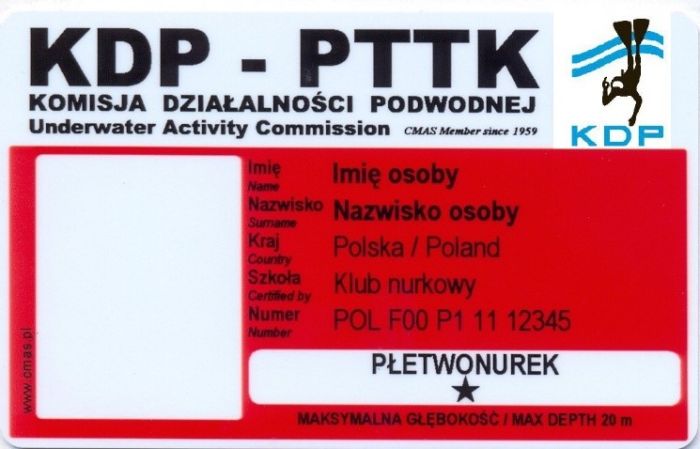
CMAS certification (P1)
- Passing the modules: ‘Diving theory’, ‘Diving practice’ and ‘Underwater research practice’ is equivalent to completing the CMAS P1 scuba diving course
- The above three modules must be completed within a single semester.
- Upon passing these three modules, it is possible to obtain the CMAS P1 scuba diver certificate (cost approx. 300 PLN, fee payable to the CMAS federation
Conditions for participation in practical classes
To take part in the “Diving Practice” and “Underwater Research Practice” modules, the following conditions must be met:
- Medical certificate – guidelines for doctors are provided below – and a participant’s health declaration.
- Basic swimming skills
- swimming 100 m without stopping (4 lengths), without pausing, without stopping at the turns, without touching the ropes
- ability to open one’s eyes underwater
- Personal equipment (diving ABC) – students should purchase: a mask, snorkel and fins.
- During the first few sessions, ABC equipment will be provided to students (for the duration of the induction).
How do I enrol in a competence block?
The competence blocks of the Faculty of Historical Sciences (WNH) include university-wide courses held both at our faculty and at other faculties of Nicolaus Copernicus University, as well as open-access courses.
To begin studying within your chosen module, without the need to submit declarations, applications or complete any additional formalities. Once all courses in the module have been completed, submit a request to issue a certificate.
If you have any questions, please get in touch with the course lecturers directly.
Guidelines for doctors
Required health status:
- Cardiovascular system: No angina, fainting, serious heart defects or high blood pressure.
- Respiratory system: Clear airways, no active exercise-induced asthma or COPD.
- ENT: Ability to equalise pressure in the ears and sinuses (patent Eustachian tubes).
Major contraindications (absolute):
- Epilepsy or unexplained loss of consciousness.
- History of spontaneous pneumothorax.
- Serious mental health conditions and claustrophobia.
- Alcohol or drug addiction.
Medical certificate: Usually valid for 12 months, issued by any doctor, although a diving medicine specialist is recommended.